


Prefer to listen to a human conversation?
In the past few weeks, something unusual has been happening in exam rooms across the country.
Patients are bringing it up first.
Not a supplement they saw on Instagram. Not a symptom they’ve been ignoring. A name change — to a medical condition many of them have spent years trying to get diagnosed with in the first place.
PCOS. Polycystic Ovarian Syndrome. Or rather, what used to be called PCOS.
Because as of May 2026, an international panel of researchers and clinicians has officially proposed renaming it: Polyendocrine Metabolic Ovarian Syndrome. PMOS.
The reaction has been striking. Patients who have spent years being dismissed — told their symptoms were normal, that they should just lose weight, that their labs were “basically fine” — are calling their doctors. Texting their friends. Posting about finally feeling seen.
And underneath all of that excitement is a question worth sitting with: Why does a name change matter so much? What does it actually change? And what has been missing from the conversation about this condition all along?
The Claim
Social media has never been short on PCOS content. The condition has long been fertile ground for wellness influencers, supplement companies, and “root cause” practitioners offering what mainstream medicine often failed to deliver: a clear explanation, a specific protocol, a sense of hope.
The most common claims look something like this:
“It’s all about insulin — fix your insulin, fix your PCOS.”
“Go keto. Cut carbs. Lose weight. It’ll reverse.”
“Your doctor is just masking your symptoms with birth control.”
“You can cure this naturally with the right supplement stack.”
Now, layered on top of all of that, is a new wave of content about the name change itself — some celebrating it as a long-overdue paradigm shift, some worried it will create more confusion, and some using it as fresh evidence that conventional medicine has been getting this wrong all along.
Why It’s Going Viral
To understand why this name change landed the way it did, you have to understand what people with PMOS have been living with.
This is one of the most common hormonal conditions affecting people with ovaries — estimated to affect 9 to 13% of the population. Yet research consistently shows that it takes an average of more than two years and visits to at least three different clinicians before someone receives a diagnosis. In one survey of people in PCOS support communities, only 35% reported being satisfied with their diagnosis experience, and just 15.6% were satisfied with the information they were given at the time.
Meanwhile, diagnosed prevalence in insurance records runs far below what population-based estimates would suggest — meaning a lot of people have PCOS, and a lot of them don’t know it (or at least their doctors don’t).
When you’re told, over and over, that your symptoms are vague or minor or probably nothing — and then you find an online community of thousands of people describing the exact same experience — the appeal of social media health content isn’t hard to understand. The internet filled a gap that the healthcare system left wide open.
The name change has gone viral for the same reason the condition has always been a social media staple: people with PMOS have not felt seen, and anything that suggests the medical establishment is finally catching up is going to generate a reaction.
There are also real concerns circulating online about what the transition might mean — whether it will disrupt research funding, create confusion among providers, or delay diagnosis even further in the short term. These are legitimate worries, not unfounded ones, and they deserve to be part of the conversation.
What the Science Shows
What is PMOS — and how is it diagnosed?
The name has changed. The diagnostic criteria have not.
PMOS is still diagnosed using the Rotterdam Criteria, which require two out of three of the following:
Irregular menstrual cycles — cycles shorter than 21 days or longer than 35 days (or fewer than 8 cycles per year), among other definitions depending on age and time since first period.
Hyperandrogenism — either clinical signs like excess hair growth in a typically male pattern (hirsutism) or hormonal acne, OR confirmed biochemically through elevated testosterone or DHEA-S on labs.
Polycystic ovaries on ultrasound — and this means 20 or more follicles (not cysts) per ovary, not the one or two cysts.
A few things worth knowing: you do not need all three to be diagnosed. You do not need labs to prove the diagnosis — only to rule out other causes. And you can absolutely have PMOS with a completely normal ultrasound.
Why the name had to change
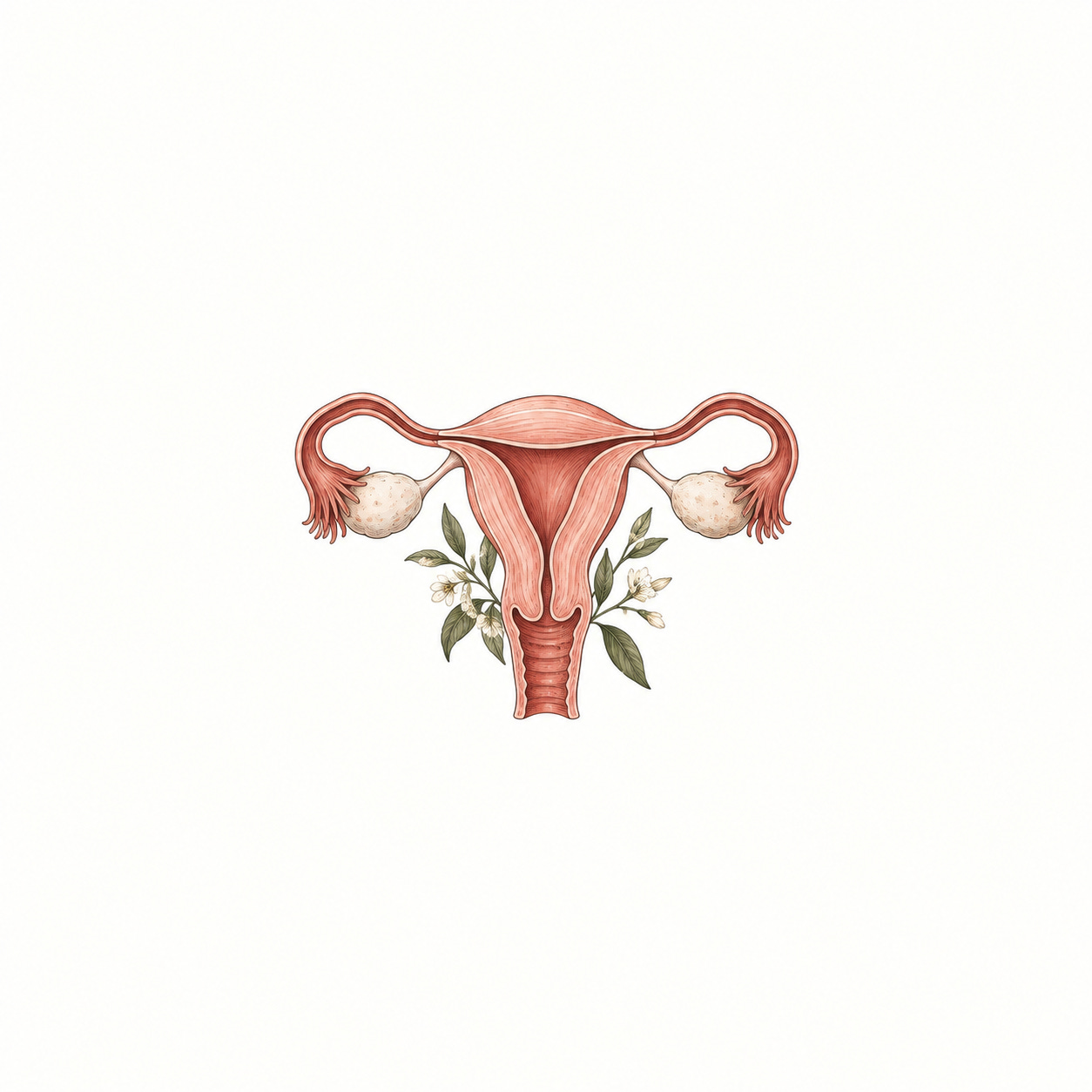
“Polycystic Ovarian Syndrome” describes (incorrectly) what you might see on an ultrasound in some people who have the condition. It does not describe what’s actually happening — which is a complex, multi-system hormonal and metabolic disorder that affects far more than the ovaries.
People with PMOS are at increased risk for insulin resistance and type 2 diabetes, abnormal lipids, high blood pressure, sleep apnea, anovulatory infertility, endometrial hyperplasia and cancer, anxiety and depression, and eating disorders. The condition has also been found to have metabolic parallels in people with similar polygenic risk scores who don’t have ovaries — meaning the underlying biology extends beyond reproductive anatomy entirely.
Calling it a syndrome of ovarian cysts was always, at best, incomplete.
The subtypes — and why they matter
One of the more significant findings in recent PCOS research is that the condition isn’t one thing. A large study clustering clinical variables in nearly 12,000 affected people across five international cohorts identified four distinct subtypes, each representing roughly a quarter of cases:
Hyperandrogenic PMOS: Elevated testosterone and DHEA-S, highest risk of second-trimester pregnancy loss and abnormal lipids.
PMOS with metabolic/glycemic complications: Higher rates of insulin resistance, type 2 diabetes, high blood pressure, and dyslipidemia. Lowest live birth rates. Importantly, weight gain in this group is a symptom of the underlying metabolic dysfunction — not its cause. Telling these patients to “just lose weight” is not only unhelpful; it often leads to cycles of extreme restriction, weight cycling, and worsening metabolic outcomes.
PMOS with high SHBG: Most favorable reproductive outcomes, lowest rates of diabetes and hypertension, lowest BMI among the four subtypes. Lower testosterone and LH levels.
PMOS with high LH and AMH: Greatest risk of ovarian hyperstimulation, the most persistent course.
Understanding subtype matters because it shapes what to monitor and how to prioritize treatment. It also reinforces something important: you cannot look at someone and know what kind of PMOS they have, or how their condition is affecting them.
Clinical Nuance
On birth control
Birth control is one of the most misrepresented parts of the PMOS conversation online. It is not “just masking symptoms.”
Hormonal contraception can directly treat hyperandrogenism symptoms like acne and excess hair growth. More importantly, if someone with PMOS is having very infrequent cycles, the uterine lining isn’t being shed regularly — and long-standing untreated amenorrhea significantly increases the risk of endometrial hyperplasia and endometrial cancer. Protecting that lining isn’t a “band-aid”. It’s preventive oncology.
For people who prefer not to take estrogen-containing contraceptives, spironolactone (an androgen blocker) can address hyperandrogenism symptoms, and a progesterone IUD can protect the uterine lining. But birth control does both, which is why it’s so often recommended — not because clinicians are cutting corners.
On lifestyle
Lifestyle genuinely matters for PMOS — and the evidence-based guidelines are clearer on this than social media tends to be, in both directions.
There is no special diet. Low-carb and ketogenic approaches are not specifically supported by the 2023 international guidelines. What is supported: regular balanced meals, adequate protein and fiber, consistent movement (with resistance training being particularly helpful for insulin sensitivity), attention to sleep quality, and screening for sleep apnea — which is underrecognized and significantly worsens metabolic outcomes when untreated.
The supplement with the most evidence is inositol, which may support insulin signaling. Vitamin D deficiency is common in this population and worth checking. But inositol is not a substitute for evidence-based treatment when insulin resistance is significant — metformin has a far stronger evidence base and should be considered earlier than it typically is, including in adolescents when appropriate.
Emerging data also supports GLP-1 medications, SGLT2 inhibitors, and TZDs for people with significant insulin resistance who can’t tolerate metformin. These are still off-label uses with less evidence, and any treatment decision warrants careful discussion with a clinician who knows your full picture.
On the weight conversation
The 2023 international guidelines were explicit about something that rarely makes it into the clinical encounter: a weight-focused approach to PMOS is more likely to cause harm than a habits-focused approach.
Weight gain in people with the metabolic subtype of PMOS is a downstream consequence of insulin dysregulation — not the cause of it. Recommending aggressive caloric restriction without treating the underlying metabolic condition sets people up to fail, and fail repeatedly, which worsens both metabolic outcomes and psychological wellbeing. People with PMOS are already at significantly elevated risk for eating disorders. Weight stigma in clinical settings compounds this.
The goal is to support healthy behaviors and treat the underlying condition. Weight changes, if they happen, follow from that.
On getting the right care
Family medicine is well-positioned to own this condition — from adolescence through the lifespan — but that requires staying current on evolving guidance. Endocrinology and gynecology have important roles, particularly for complex reproductive questions or suspected endometrial pathology.
What’s consistently true: patients with PMOS should not be ping-ponged between specialties with no one holding the full picture. If you have this diagnosis, you deserve a physician who can address the metabolic, reproductive, dermatologic, and psychological dimensions together — or who knows when to coordinate with someone who can.
The Antidote
For Patients
It makes sense that I went looking for answers when medicine kept leaving me without them.
My symptoms are real, even if they took years to be recognized.
A name change doesn’t change my diagnosis — but it may change how the medical system sees it.
Birth control is a treatment, not a cover-up. So is metformin. So is lifestyle change. I deserve to understand why each is being recommended.
Weight gain is a symptom of this condition in many people — not a character flaw, not a behavior to be blamed for.
I can use social media to feel less alone and to prepare better questions for my appointments. I don’t have to choose between being informed and being cared for by a clinician who knows my full history.
There is no supplement stack that treats what this condition actually is. But there are real, evidence-based options — and I deserve access to them.
For Clinicians
“I believe you. What you’re describing is real, and I want to evaluate it properly.”
“The diagnostic criteria haven’t changed with the name — but our understanding of this condition is broader than it used to be, and I want to make sure we’re looking at the full picture.”
“Birth control isn’t just regulating your period — it’s also protecting your uterine lining and treating the hormonal symptoms. That’s a real treatment.”
“The goal here isn’t weight loss as a target — it’s building habits that support your metabolic health, and treating the insulin resistance directly if it’s there.”
“Sleep apnea is more common with this condition than most people realize, including in people who don’t think of themselves as typical candidates. Let’s ask a few questions about your sleep.”
“If you’ve been on social media reading about this, I want to hear what you found. Let’s go through it together.”